Hey Health Seekers! You’ve made the exciting decision to embrace a ketogenic lifestyle – fantastic! You’re ready to tap into fat burning, boost energy, and improve your metabolic health. But as your body transitions from burning carbohydrates to burning fat for fuel, you might encounter a temporary phase often called the “keto flu”. Don’t let the name scare you; it’s a sign your body is making incredible changes, and it’s completely manageable!
Let’s demystify this initial “keto adaptation” period, so you know exactly what to expect and how to sail through it to feel your best!
What is “Keto Adaptation”?
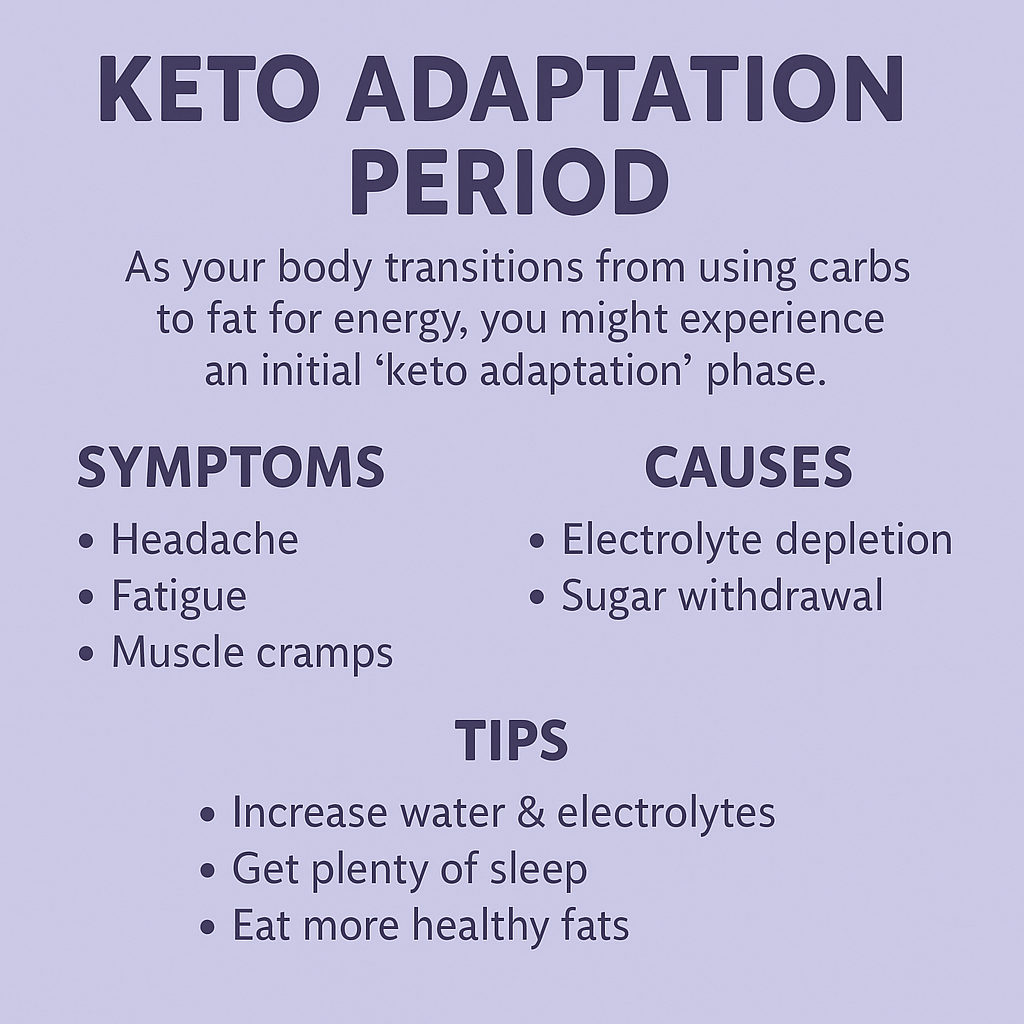
Keto adaptation, or becoming “keto-adapted,” is the process by which your body shifts its primary energy source from glucose (from carbs) to fat and ketones. For most people, years of a high-carb diet have trained their bodies to rely heavily on sugar. This metabolic shift requires your system to “relearn” how to efficiently burn fat, and this retraining can take anywhere from a few days to a few weeks.
The “Keto Flu”: Symptoms and Causes
The “keto flu” is a common, temporary cluster of symptoms that can appear within the first few days to weeks of starting a very low-carb diet. It’s essentially your body “withdrawing” from sugar and processed foods while it adjusts to its new fuel source.
Common Symptoms You Might Experience:
- Headaches: Often one of the first and most noticeable symptoms.
- Fatigue/Low Energy: Feeling tired, sluggish, or unusually sleepy.
- Brain Fog: Difficulty concentrating, feeling mentally hazy, or forgetful.
- Nausea or Upset Stomach: Some people experience mild digestive discomfort.
- Dizziness or Feeling Weak: Especially when standing up quickly.
- Irritability/Mood Swings: Due to the metabolic shift and sugar withdrawal.
- Muscle Cramps: Particularly in the legs.
- Heartbeat Alterations: Feeling like your heart is racing or fluttering.
Why Does It Happen? (The Science Behind It):
The main culprits behind the keto flu are:
- Water and Electrolyte Depletion: When you cut carbs, your body releases stored water, which also flushes out essential electrolytes like sodium, potassium, and magnesium. These minerals are vital for nerve, muscle, and brain function.
- Sugar Withdrawal: Your body and brain are accustomed to a steady supply of glucose. When that supply is drastically reduced, you can experience symptoms similar to withdrawal.
- Stress on the Body: Any significant dietary change can be a stressor as your body adapts.
Navigating the Transition: Tips for a Smoother Ride
The good news is, the keto flu is largely avoidable or its duration can be significantly reduced with simple strategies. Many people who give up on keto during this phase mistakenly believe the diet is making them sick, when in reality, it’s a temporary adjustment.
- Hydrate Aggressively: Drink plenty of water throughout the day. Aim for at least half your body weight in ounces daily.
- Replenish Electrolytes: This is the most crucial step!
- Increase Sodium: Add more salt to your meals, drink bone broth, or consume saltier keto-friendly foods like bacon or pickled vegetables.
- Boost Potassium & Magnesium: Incorporate foods rich in these minerals like leafy greens (spinach, kale), avocados, and certain nuts and seeds. Consider a quality electrolyte supplement, especially during the first few weeks.
- Go Easy on Yourself: In the first week, don’t plan intense physical exercise or demanding mental work. Allow your body time to adjust.
- Prioritize Sleep: Quality sleep is vital for recovery and metabolic health. Even if you don’t feel tired, aim for sufficient rest.
- Increase Healthy Fats: Ensure you’re eating enough healthy fats at each meal. This provides stable energy and helps with satiety, easing the transition.
- Don’t Give Up! The keto flu usually lasts just a few days, and once you’re past it, you’ll likely feel a surge in energy and mental clarity. Many report feeling more energetic than ever before.
What to Expect, Week by Week:
- Week 1: This is where the most learning occurs. You’ll be surprised by hidden sugars in foods. Days 2-3 are typically the hardest for keto flu symptoms. Many experience initial rapid weight loss (2-10 lbs), mostly water weight.
- Week 2: Most people enter ketosis by day 10. You’ll likely notice decreased appetite and increased energy. Fat loss typically begins (1-2 lbs/week).
- Week 3 onwards: You’ll start to find your rhythm, instinctively knowing which foods to avoid. Consistent fat loss (1-2 lbs/week) continues, and you’ll likely enjoy sustained energy, clearer thinking, and better sleep.
The “keto adaptation” phase is a temporary hurdle on the way to long-term health benefits. By understanding it and taking proactive steps, you can minimize discomfort and set yourself up for a truly transformative experience.
Ready to embark on your keto journey with confidence? Visit www.easyketosystem.com for more content and your comprehensive guide to keto success!
You can download your copy of the Keto Made Simple Guide here: